On the spirit of gender conversations

When i was listening to this discussion about differences in gender aggression it suddenly dawned on me what i was really listening to.
It was really not the subject at hand, or the statements made, it was the spirit of their arguments. How they confronted each other. It suddenly made sense to me what was happening.
Mr Peterson was not trying to relate any of his arguments to her. Or create a common ground of mutual interest between them. He was trying to make his point, no matter what. His arguments where non-relational and affected. They came out almost as he was being possessed. And if psychic connectivity is a feminine trait, it was clearly absent. It was not inspired as in a relation to her. To the external situation. There was no kindness or warmth in this discussion trying to bridge a connection by subject on to the other part. It was conditioned and he was opinionated and affected, and he was trying to force his arguments through without really relating them to her.
On the other hand she was trying to diminish his arguments and ridicule individual statements. She was not trying to process any of his arguments based on their own value, making this a discussion about the subject at hand. She was not into the spirit of the conversation. And if objective interest is a masculine trait, her masculinity was destroying her ability to relate with her masculinity to the arguments presented to her. She obviously sensed that she was pushed because the arguments was not aimed for her, but forced onto her. So she then appeared equally possessed, but by her masculinity, making them both have a go at each other with a kind of automatic and confrontational behaviour.
So, if it has ever been masculine traits in women, and female traits in men, this is how I imagine they would appear when they are compulsive. Animating men and creating animosity for women.
I just had to look at the spirit of a conversation to be able to see it.

Have a look.
On the spirit of masculinity

I would like to add to what Mr Jordan Peterson talks about in this clip. And it is that the individual experience and phenomenology of the masculine spirit, when it is being cultivated inside psychological relations, or the feminine, it will immediately become challenged by the dark side of civilization, which it cannot neglect any more. This will in turn lead to a sense of a deep moral responsibility towards acknowledging were it is leading us in terms of being human. It is the loss of that which makes people go mad and the spirit of masculinity go so wrong. This reality is not beyond human understanding. It is just perceived in another way than externalized rational thinking. But he makes a very good point when he speaks about what the outcome is of the devaluation of spirit, or objective interest. When it is externalized, and not part of our objective psychic functioning in both men and women. People will become disoriented and confuse moral responsibility with literal judgements.
In that society people will become dogmatic, inhuman and materialistic. They will loose their ability to connect individual experiences to human life. No matter how brutal, or hostile to life itself those human conditions are, or what has become of that society.

About elections and remote decision making

There is this great strategy. And it works all the time. No matter where and when.
You take part in anything that may be argumentative between people and then just choose side, make it political.
Fuel the opposing extremes and then claim as many votes as you can as you obscure the issue by heated generalisations. Promote their automatic behaviour.
People in the northern part of Sweden have a genuine dislikeness for the remote rulings of Stockholm. So any such strategy here is really clever. It will make people forget that the bottomline, what it is all about, is the decision making made on their behalf. On regional things that they have in common, agreed upon or not. And that it is not up to any outside part to jump to conclusions. But here they are, and they are getting played to secure popularity votes that is not going to benefit them in any way, and certainly not in any forseeable future. This has nothing what so ever to do with any local interests in this region. Its about getting influence in Stockholm. And claim votes wherever it is possible to secure this influence.
So let them squabble between themselves.
Fuck strategy.
Why should we bother about the army of the dead?

The father of our civilised world

Imaginary speaking, I find myself living in a society which is compelled to act this figure in the cloud out with the ruling it has over everybody´s apprehension. They don´t seem to know it, but they are supporting him by continuing his old formal character, making his outworn presence felt in everyday life in terms of rules and regulations, in dogmas, and in a distant dead behaviour coming out of it. They are upholding a system of absence in their lives by trying to fill themselves up with a sense of responsibility and duty towards social and religious convention. Which they also force onto others. They believe in some principles of normality. Not in the experience of transpersonal reality. And nobody seem to be questioning this cloud figure rulings there. They just see themselves as a single part of his organisational maintenance.
It is almost incomprehensible what this is doing to them, and to our environment.
His tyrannical madness is what makes them all crazy.

The Great Mother

The male end of our inner balance is on the emphasis of the product by focused, self-disciplined energy to do, to shape, to specify, to name and define. The female end is on the process, and on the experience of being. Appearantly, the male end is also the current ideal to which a one-sided collectivity aspires.
Of everything associated with femininity, being is perhaps the most misunderstood since the relation to being is defined through developing a close relationship to nature, to other people, and to life. Its about our capacity to be receptive to our lives in an embodied way. Here we listen to our within, to another kind of creativity, and to our own inner sense of things. She is our crucible and our liberation from a world of sufferings. It is also by her we get our first lesson of life through our mother.
Our planet earth also carries all life in a similar way as a Great Grand Mother being to us. She is then that part of us that honors the nature of our inner life in relation to earth and our individual way of being, regardless of how different we might appear with our behaviour to the collective and its principles of normality.
This male and female balancing is a living reality right here and now, a presence were being is the neglected part of our conciousness, it is suppressed by the preferred static ideals so many of us seem to rely on. Together with a reluctancy to change.
So we just force ourselves to stay busy. Searching all over the place for this being, acting like we are completely out of our minds.

On christmas celebration

In contradiction to what christianity had led us to believe, and later american consumerism, i suggest that Santa Claus origin is rather to be found in the northern folklore figure of Väinämöinen, the hero creator of our world anew. And in the stories about him where he is viewed as the essence and the source. A wise man. The seer and creator. The bringer of conciousness. A bard, and the god of chants, songs and poetry.

Väinämöinen is thus very far from the figure we invigorate our children with. And he has nothing to do with our present day view of Santa Claus or the christian substitution Saint Nicholas.

Väinämöinen is connected to the foundation of the world pillar, also thought of as the ”world tree” that was thought to rest on the Pohjantähti or the North Star holding up the world. This is the very star that we put att the top of the christmas tree.
The north star and its position in the sky is also the place where heroes seek marriage with the daughters of Pohjola. Here in Pohjola the female Louhi is the powerful and evil witch queen ruling over the northern realm of Pohjola with her ability to change shape and weave mighty enchantments. She is a queen of great power that request a payment for the hands of her daughters in marriage. Louhi sets difficult to impossible tasks to perform in order to claim such a prize as her daughters, which leads to the forging of the Sampo.
The sampo is one such payment, a magic mill of plenty which churns out abundance. Its churning lid have also been interpreted as a symbol of the celestial vault of the heavens, embedded with stars, revolving around a central axis or the pillar of the world, which is our christmas tree. The giving of gifts as the sampo, can be seen as an act of sacrifice to Louhi, for one of her daughters hands. The hero and creator has to give something up to gain entrance to Pohjola and to get himself a wife. And this is done with chants, songs and poetry. And in giving we also get the magic abundance back. The celestial vault of the heavens. And we are also helping to keep the world up on its pillar. Because if there is no pillar, there is no wife. And there is no world.
There is also a good reason for doing all this at the time of ”christmas”. Christmas is celebrated on winter solstice when the pillar seems to be at its weakest, and almost broken on the longest night of the year. And as a recognition of rebirth, of creating or balancing up the world again with the help of ”Santa Claus”, or Väinämöinen, we try to assemble back his lost gift. The Sampo. Which was stolen by Louhi and broken. We bring back the pieces of sampo as christmas gifts to be able to enter Pohjola.
When we celebrate christmas, we are trying to help keeping the world up on its pillar.

The reality of being

”In the spiritual sense of reality you’re connected to everything, you know you’re connected.
But in the religious perception of reality, you committed a crime for being born, and in order to be – to justify being here – to get to stay – you had to submit yourself to an authoritarian system. You had to submit to the male dominator chain of command.”

— John Trudell

Democracy and how to go about it.

Maybe it is our parliament, and our gouvernment itself who need some adjustment.
What we see right now is that one part is missing in that equation. When considering the present situation, it is obvious something in our gouverning is not there, the parliament do not really answer to no one. The people they are responsible for is not really there, so they don’t have any real counterpart.
Just think about that for a moment.
Because right now they just answer to themselves. And this is not good democracy.
Who is taking care of our wealth. Were is our leadership of wealth. Who is taking care of our water. Our nature. Who is looking after our common good. Obviously, wealth is very much dependent on how new money first should be spent into the economy. But there is no true counterpart in parliament for that.
Our leaders badly need this. They should have to answer before the leader of wealth to be able to make good decisions for the people.
Right now, our parliament here in Sweden, as in many other countries, are divided among themselves, and arguing full time about who should be its leader. How parliament should be led, and in what direction. And with our media fully occupied by reporting on this disagreement, good decisions going out the window.
And this is currently built into the system by the absence of a real working counterpart.
For that to change, we need them to answer to someone on the basis of a working democracy, and that should be accomplished through a leadership of wealth.
With such a counterpart, our parliament then have to change its priorities to be only of concern to the wealth and wellbeing of its people.
We should even consider having a pre election on candidates where only women can vote. And after that we can all vote on the outcome of their election.

Our ambassador on Island suffered heavy criticism for it, but he is not too far from the truth, intuitively thinking democracy is being ”dismantled” by its current constitution in Sweden.

By thinking about it anew, we may actually adjust our parliament closer to its original vision, and maybe, we can then make our parlament the true working heart of democracy we want it to be.

The west we made of ourself

When i put the west i see in my mirror, i sense the image after which we have made ourselves.
This sadistic, melancholy one sided anxiety ridden paranoia of an omniscient rationality and omnipotent ruler through abstract principle of justice, morality and order. Enraged when not followed or his will is crossed. Our consciousnes is reflecting this image. Most often as cold, distant and ruthless, but as an ideal he is old, bearded and distant. A god of manhood. Even women identify with this image. This is how we all think we should appear if we want to rule, or show decisiveness. We think conquering is relating. Not surprisingly, this image we have of ourselves then, is also a wifeless one. It´s an ideal of manhood, and it has no woman beside it. There are no traits of compassion. Or true generosity. It suffers a complete lack of the feminine.
No wonder there is a problem with the nature of earth and personal feelings. And in our views on women.
This is what we force upon the world. This is our image. The very image we present ourself with to the world.

What is going on out there

Looking at the world today, the problem i see is not the youth movement started in the late fifties, continuing to this day with its rebels questioning authorities through beatniks, flower power, punks, neo rights, leftists, or modern art. Or music, film, literature, or todays climate or money distribution movements. Nor is the problem the abstract and stubborn rationality of established order through old worn out ideologies, wall street politics, or economic theory. Our religious views or our -isms.
What we see in our world are the symptoms of all of that. And the tension we have in the world is the absence of the unification of the two in the world of individuals.
The grumpy old men of frozen and established order versus the dynamic views and concerns coming from outside of time in our youth. Often this youth present their need for change in something even more rigid than the present protectors of the past. But the one are in a desperate need of the other.
Its a real horror to watch.

About leadership today

Being directed by, and unaware of the patterns of behaviour that flow from the organizing structure of a certain collective itself, rather than the individuality of its members,
is getting us very close to how people have come to appreciate the political, financial and corporate leadership of today.

Imagination as individuality

When we try to describe something to someone else, we use our imagination trying to coordinate the personal inner stream of images and events into a coherent and living picture. There are times when we have to use someone else’s imagination, and we will also use both our own and others mixed together to be sure to get understood by what we are trying to describe in a certain context. But we also have a tendency trying to make them more believable by telling others that they should take them literally.
And we are even saying that since other people do take them literally, we should take them for granted if we want to get listened to, or get acceptance from others without being scorned at.
We are all using our imagination as individuals to express the experiences we have of ourselves here and now in our present environment.
And it is a true nightmare that we use some of them in a literally fashion, and as a collective to reject, or even repress the individuality behind them. We are actually getting shaped into a new internal coherence by our imaginations.
Once we have written ourselves into a particular fantasy with its expectations, typicalities, its character traits, what it offers for recognizing oneself. We then begin to shape our life into a caricature of that imagination.

Origins of personality?

When every private emotion and personal ambition have its origin in public opinion and the media. We are simply being reduced to the expectation and the illusory goals of an eager and excited collectivity.

About internet access

What Högsta Marknadsdomtolens(Highest Market Court) ruling achieved in Sweden is that companies and organizations now can shut down individual domains that do not suit their interests through the threat of legal proceedings.
Should businesses and organizations get control of which pages we can access on the internet by shutting down domains in conflict with their view on the material on a site?

By dissallowing a certain media headline you don´t actually force the opinions or material behind it to go away.

To become public property

It can differ quite a lot between one person and another intellectually, in terms of knowledge and skills, and to be able to draw conclusions from rational arguments rather than rhetorical.

But in terms of our character, the differences are much smaller.
It is with our character we share our public opinion with others. It is were it gets its outlet.
All our differences are smoothed out.

We act anonymously on public opinion with rhetorical conclusions in the protection of the majority to justify our views and our actions.

We will then become public property.

Its not about the media, its about you and me.

The feeling tone news media deliver to us is designed to function as a short circuit, to prevent us from making thought through rational considerations when it comes to our own situation. That’s why they always seems to aim to destroy our rational defences, so that we come to conclusions immediately, without reflection and in emotional distress by rhetorics instead of solid well made arguments.
Media always try to stimulate our feelings on an unconscious level,
to make people respond with automatic behaviours, and collectively instead of individually.
That is why they are so effective when we are made uncertain, in crisis, follow opinion polls, an ideology, an -ism, trends or is in shock.

We agree on things, think or act in a way we would not accept if we were given time to consider it properly.

The fact that we have a tendency to stand by the opinion in order to belong and to get recognition from our surroundings, to be consistent although the reasons for our opinions may be questionable.
That fear is something that is expected.

Unconsciously we then inflict terrible hardship on each other rather than change the beliefs we have that are created for us, to those that is created by us.

Whats all this talk about a budget?

A balanced budget means no new injection of money into the economy.
The financial year looks the same at the end as it looked at the beginning.
No change has occurred.
There is only one reason to have such a limitation of wealth, that is if inflation threatens the economy as our gouvernment has charged too little tax out of it.

A budget surplus means that the government has managed to spend less money in to the private sector than they have taken out in tax.
This means that the private sector now has a deficit of money in it.
The financial year ends with the fact that there is less money in the private sector than there was in the start of the year.
This means that households and firms has to borrow or use their savings to maintain their consumption of goods and services in order to maintain the existing level of revenues and living standards.
This is also occurs when our banks are aloud to control the money supply.
If the surpluses are retained for a long time the whole of the private sector has to reduce their expectations and their economic activity, and we get a recession with unemployment as a consequence, or it has to try to compensate by putting itself into (more) debt. Which was the case leading up to the bank crisis in 2008.
A follow up to this happens when loans cannot be repaid, which later turned out to accelerate and spread the banking crisis.

With a budget deficit the state has charged less tax out of the economy than it has spent into what we use in the economy. There is a general financial prosperity and employment increase because the supply of money increases to come in line with the existing resources.

The macroeconomic terminology thus have an opposite impact on the real economy than household thinking because households and firms use the money. Gouvernments have the constitutional right to create and spend them for us to be able use them in the economy.

A budget then has nothing to do with ideology, an -ism or any doctrin. But it has all to do with who controls the money supply.

Resistance is an authentic response

protest

The world is drawing attention to itself by means of its symptoms, its becoming aware of itself as a psychic reality.


The world in which all subjectivities are set has fallen apart. Breakdown is in a new place – bank scandals with government collusion, pollution and street crime, the loss of literacy and the growth of junk, deceit, and show. We now encounter pathology in the psyche of politics and medicine, in language and design, in the food we eat. Sickness is now “out there”.

Hence, to call a business “paranoid” means to examine the way it presents itself in defensive positions, in systematization and arcane codes, its delusional relations between its product and the speaking about its product, often necessitating gross distortions of the meanings of such words as good, honest, true, healthy, etc. To call a building “catatonic” or “anorexic” means to examine the way it presents itself, its behavioral display in its skinny, tall, rigid, bare-boned structure, trimmed of fat, its glassy front and desexualized coldness and suppressed explosive rage, its hollow atrium interior sectioned by vertical shafts. To call consumption “manic” refers to instantaneity of satisfaction, rapid disposal, intolerance for interruption (flow-through consumption), the euphoria of buying without paying (credit cards), and the flight of ideas made visible and concrete in magazine and television advertising. To call agriculture “addictive” refers to its obsession with ever higher yields, necessitating ever more chemical energizers (fertilizers) and mass killers (pesticides, herbicides) at the expense of other life forms and to the exhaustion of agriculture’s earthen body.

– James Hillman –

Om ISDS och TTIP

Ska rätten att fatta egna beslut lämnas över till världsbanken?

sarek

Genom att använda ekonomiskt misstroende som ett medel mot stater och deras regeringar kan man få dem att gå med på något som inte har med handelsavtal att göra. Som ett extremfall kan vi fråga oss om det är världsbankens uppgift att fälla avgöranden om t.ex. barnslaveri? Är det deras sak att fatta beslut om vår fjällmiljö?

Dokumentären finns på svtplay under Frihandelns pris »

Den finns också på YouTube TTIP: Might is Right »

Hur relaterar vi till varandra och till våra ideér?

Vi är nästan i stånd till vad som helst för att få ett erkännande och bli bekräftade av andra i våra yttre roller. Vi låter också detta helt styra vårt beteende där.
Vi anpassar till och med vår moral efter detta.
Men vi har också en inre personlighet som skapar relationer till vårt inre och som styr vårt beteende i förhållande till oss själva.

Det är nog bara där, i detta något mitt emellan dom, som det är möjligt för oss att kunna hitta något som liknar äkta relationer.

Om arv och miljö

Våra eventuella ”symtom” eller ”störningar” kan ju också vara ett uttryck för ett unikt inneboende något som gör uppror mot en inadekvat omgivning.
Det kan alltså vara vårt inres uttryckliga försök att värna om sin sanna natur.

Det värnar om sitt oberoende mot övergrepp och intrång.
Ett oberoende som också gäller för hur vi vill se på oss själva.

Vi kan därför anta att vi är något mer än bara en produkt av vårt arv och vår miljö, att vi är betydligt mer än bara ett offer för vår uppväxt.

Vad letar vi efter?

Vi är så vana att anpassa oss till det i andra som dom vill tycka om hos sig själva när vi söker efter bekräftelse, vårt livs berättigande, ja själva vår existens mening, att när vi söker efter detta något i vårt inre så börjar det hos andra.

Vi letar efter vad av oss som vi kan hitta i andra, och hur det skiljer sig åt från vad vi vill vara.

Men det är ju inte vad vad som skiljer människor åt som gör oss till vad vi är.
Vad som är unikt i oss själva har förmodligen funnits med i oss ifrån allra första början.

Om Erfarenhet

Erfarenheten och våra uppfattningar påverkar varandra ömsesidigt.
Vi härleder inte bara våra föreställningar ur våra erfarenheter i enlighet med fantasin om empirism,
våra föreställningar formar ju också själva erfarenhetens natur.

– James Hillman

Så hur mycket av våra uppfattningar tillåter vi att bildas ur oss själva?

Information sedd genom Lamarckism

Den Lamarckianska evolutionstanken att förändringar av den inlärda informationen som existerar i miljön genom vanor, också kan skapa nya egenskaper i den befintliga populationen, är ett annat sätt att helt enkelt säga att informationsprocessen också kan gå betydligt fortare än den gör från en generation till en annan. Här överförs den istället genom att man i den aktuella miljön tillgodogör sig ny information genom att kopiera den och sedan tillämpar den direkt inom populationen.

Att använda Darwin på information

”The right information in the right place changes life”.

Evolution i det här sammanhanget är den process individer genomgår då ny information förändrar mellan olika generationer vilka successivt följer på varandra. Darwins evolutionsteori beskriver då hur processer av information kan förändra egenskaper i en hel population från en generation till en annan.

Naturligt urval innebär då att individer med förmågan att tillgodogöra sig informationsprocessen i den aktuella miljön genom att lära sig att använda den, tenderar att vara dom som kommer att sprida informationen vidare till kommande generationer.

Så långt är allting gott.

Naturligt urval kan på detta sätt verka både konserverande och förändrande.

I en stabil miljö då urvalet av information har fått verka tillräckligt länge utan att ny information tillkommit i den, kommer individernas evolution att uppnå ett jämviktsläge.

Det naturliga urvalet av informationsflödet kommer under dessa förhållanden att verka genom att individerna väljer bort den information som skiljer sig från genomsnittet, och populationen kommer att förbli oförändrad.

Det är en träffande slutsats av Darwin.

Vem ska få äga vår karaktär?

vi påverkas på ett sätt av våra medier som gör att vår karaktär blir allmän egendom.

Det kan skilja ganska mycket mellan en person och en annan intellektuellt, kunskapsmässigt och förmåga till att kunna dra slutsatser ur rationella argument istället för retoriska.

Men när det gäller vår karaktär är skillnaderna mycket mindre.
Det är med vår karaktär vi delar den allmänna opinionen med andra.
Hög blir låg och olikheter jämnas ut. Det är här den allmänna opinionen får sitt utlopp.

Vi drar i den allmänna opinionen retoriska slutsatser och agerar anonymt i skydd av flertalet för att rättfärdiga våra åsikter och våra handlingar.

Vår karaktär kommer på detta sätt att bli allmän egendom.

Medieanalys

Jag får alltid intrycket av att media idag hamnat i en allt tydligare samexistens med partipolitiken och ekonomin hos våra största exportföretag.

Detta intryck förstärks ytterligare när nyhetskällan allt oftare består av enkla opinionsundersökningar där man driver populära åsikter i än den ena, än den andra politiska riktningen då opinionen också styr mediernas ekonomi.

Den statliga ekonomin kommer på det här sättet att beskrivas uteslutande ur våra globala exportföretags perspektiv utan förankring i makroekonomin som i sin tur styrs på ett fundamentalt sätt av hur vårt monetära system är beskaffat. Dessa företag har till skillnad mot staten inte någon rätt att ge ut några nya pengar och inte heller någon konstitutionell rättighet att styra över penningmängden.

Det går därför inte alls att ur nyhetskällornas uppblåsta kallprat och opinionsundersökningar dra några allmängiltiga slutsatser om de processer som styr den gemensamma ekonomin för de människor i vilkas intresse vår media tror sig föra sin talan.

Flertalet kommer på det här sättet att förlita sig på att en viss åsikt är den rätta åsikten. Och dom kommer att äga åsikter som då av nödvändighet följer ur ett visst allmänt accepterat åsiktssammanhang, utan att veta varifrån den ursprungligen kommer, eller på vilka antaganden den egentligen grundar sig.
Inte heller hur de i verkligheten relaterar till nationalekonomin.

Nyhetsförmedlingen befinner sig i en upprepning som inte längre ger en saklig återgivning till folk i allmänhet. Den kommer istället att spegla det politiska spelet, och våra globala exportföretags ekonomiska intressen i en symbios med gemensamma föreställningar om den verklighet man tror sig kunna beskriva inifrån denna.
Undantagen är få, och den uppenbara följden av det här är att man på detta sätt bara försöker stimulera våra känslor på en omedveten nivå så att vi ska reagera på ett av andra överlagt och förutbestämt sätt.
Våra medier och våra beslutsfattare hamnar på det här sättet bara i en sluten inbördes nytta av upprepat gemensamt innehåll.

Om informationskonsumtion

nyheter är en produkt av information som skapats i ett bestämt syfte och säljs i en förpackning med en tilltalande rubrik. Hur förpackningen uppfattas säljer också bättre än själva innehållet.

Känslorna nyheter förmedlar fungerar i bästa fall som kortslutningar som förhindrar att vi gör genomtänkta och rationella överväganden när det gäller vår egen situation. Det är därför dom alltid syftar till att rasera våra rationella försvar så att vi fattar direkta beslut utan eftertanke och gärna under känslomässig osäkerhet.
Innehållet som nyhetsprodukten förser oss med försöker därför alltid stimulera våra känslor på en omedveten nivå så att vi ska reagera med automatiska beteendemönster, och kollektivt istället för individuellt.
Det är därför dom är så effektiva när människor är i kris, är osäkra, följer opinionsundersökningar, trender eller befinner sig i chock.

Vi går med på saker, tycker eller agerar på ett sätt vi inte skulle acceptera under andra förhållanden.

Att vi sedan har en benägenhet att vilja stå fast vid åsikter för att vinna erkännande från vår omgivning, och vara konsekventa trots att skälen till våra åsikter är tvivelaktiga, det är något man räknar med.

Omedvetet utsätter vi sedan både oss själva och andra för stora påfrestningar både personligt, ekonomiskt och politiskt hellre än att vi förändrar de övertygelser som är skapade åt oss mot dom som skapas av oss.

Halmdockans logik

Halmdockan består i att opponenten i ett meningsutbyte försöker avleda diskussionen från den aktuella sakfrågan till att gälla något annat för att på detta sätt försöka skapa en falsk föreställning av den andres åsikter och argument, och sedan argumentera mot den felaktiga föreställning som då skapats.
Det här är dess taktiska avsikt.
Den förvanskade uppfattning som nu yxats till av kärnfrågan får den att framstå som tvivelaktig och därefter blir den lättare att bemöta.
De verkliga argumenten viftas därefter bort. Opponenten i diskussionen tvingas då att lägga all sin energi på att förklara vad han egentligen menar, och hamnar därmed också i ett defensivt läge oberoende hur fullständiga eller övertygande argumenten faktiskt är.

Halmdockors syfte är alltid att avleda en debatts fokus så att den inte behöver bemöta själva kärnfrågan.

Hur ser expertbakgrunden egentligen ut i den aktuella frågeställningen? Vem tjänar på ett tvivel?

I media idag sår man ofta obetänksamt detta tvivel då man på detta sätt tror sig kunna skapa anseende och journalistisk trovärdighet. Tvivel åtföljs alltid av sin på förhand bestämda åsiktsriktning. Är vi omedvetna om detta så svarar vi med automatiska beteenden och detta är något man också måste räkna med, eftersom man på detta sätt försöker förhindra genomtänkta och goda åsikter genom manipulation med halmdockan.

En bra film som belyser hur denna används i praktiken av bland annat tobaksbolag, oljebolag, tankesmedjor, journalister, partiorganisationer och politiker, är Merchants of Doubt som finns att streama på netflix.
Hemsidan till boken som dokumentären är baserad på hittar du här »

mod

Whose economy are we talking about

We have given the banks the rights to shape our minds on the economy.
Despite the fact that we know that the people who run the banks are primarily concerned with increasing the profitability of the banks.
By unwittingly not knowing what we are doing, we then take key decisions on their behalf. We base our opinions, and how to wiew the economy on how the banks make up their wiews. We simply accept their truth. And we accept self injuries, privatising common assets and austerity plans by their advisory.

This is dangerous.

We are giving away our resources and our ability to decide and control our own policy. By doing this we are just supporting the conditions to further push up debt, house prices, inflate speculative financial bubbles, and starve small businesses of investment.

When our government talks about the economy, about their financial policies and funding, it is all to obvious that the decisions they are making about our economy are shaped by the interests of our banks.

They are not shaped by the interest of our common good.

Sovereign Money Initiative

The Swiss population will be the first in the world to vote on their banking and monetary system, thanks to the tireless efforts of a pro-Sovereign Money campaign.

“In a nutshell, the proposal extends the Swiss Federation’s existing exclusive right to create coins and notes, to also include deposits.
With the full power of new money creation exclusively in the hands of the Swiss National Bank, the commercial banks would no longer have the power to create money through lending. The Swiss National Bank’s primary role becomes the management of the money supply relative to the productive economy, while the decision concerning how new money is introduced debt free into the economy would reside with the government”.

Heres a link to their website »

And here is Reuters report on it »

Det är konstigt hur vi ser på ekonomi

Så länge vår regering och riksdag inte kontrollerar penningmängden så påverkar den heller inte vårt välstånd eller vår sysselsättning i någon större utsträckning.

Ingen regering har någon finansiell kraft i sina beslut utan dess konstitutionella rätt att ge ut och styra hur våra pengar först ska användas.

Vi får vänja oss vid att våra banker, eftersom de tillåts kontrollera och ge ut nästan hela penningmängden, kommer att fortsätta finansiera sin egen likviditet och spekulera i en finansiell sektor som ökar 3 gånger snabbare än ekonomin i övrigt.

Så länge vi samtidigt också föreställer oss att det är dom globala exportföretagen och deras ekonomi i sig, som är mäklare av de pengar som finns tillgängliga för att användas i ekonomin, och att dom på ett indirekt sätt får styra en omvandling av självförsörjande lokala ekonomier till beroende konsumenter av globala försörjningskedjor, så skapar vi svåra förhållanden för de inhemska företagen, för den gemensamma inhemska ekonomin, och för människorna i dom glest befolkade områdena i vårt land.

Vi kommer därför fortsatt att ha en liten gemensam penningmängd, låga löner, låg konsumtion och långa köer på arbetsförmedlingarna. Vi kommer att fortsätta skylla detta på varandra, på våra olikheter, på idéer och politiska ideologier, och ingenting kommer därför att förändras.

Dealings with high voltage

about our need to hole out.

Since all our feelings are interior and matters to us individually. They should be observed.
If our feelings have impact, it means that there is a war going on inside us. Others may have set it off, but what is set off, is my own business only.

Anything that can burn inside me should burn. Only what is left fireproof is worth keeping in me.

If my feelings are hurt they are better off hurt because all affect is inside of me and they need to be understood as that, and dealt with in an inside way by myself only.

If it is to much for me, i need someone else’s help to hold it for me so that i can come to understand what it is. I really need to hole out for periods now and then.

It is the only way for me to find out what i am transferring over to others, and letting them carry on my behalf. I just dont feel good at all about others doing this for me.

I think its a learningprocess about reading life instead of books.

Hur mycket styr vi över vårt beteende?

eller vad yttre påverkan betyder för vårt samlade beteende.

När vi som individer i flertal samtidigt kommer att reagera på samma sätt av osäkerhet eller mot de hot som skapats för oss, så kommer vi att reagera instinktivt och i skydd av den opinion som leder den.
Opinionen blir efter detta det nya beteendemönster som leder oss.

Den propaganda som styr opinionen är riktad mot den självbild som vi äger tillsammans och formger den med sitt eget syfte.

Genom att avsiktligt skräddarsy ett visst behov hos tanklösa informationskonsumenter med hjälp av ”nyheter”, genomför man en avsedd beteendeförändring med inflytandet det har över individernas självbild.

Våra handlingar kan sedan vara alltifrån storartade i sin mänsklighet, hederlighet och medkänsla till dom mest avskyvärda övergreppen och nedrigheterna.
Ett förhållande som i mycket får sin näring och energi av hur vi känner att vi vill bli uppfattade då vi står inför andra inom en viss gruppering.

Hur mycket av det egna beteendet som medvetet styrs av individen själv är alltid en öppen fråga.

Verkligheten och våra medier

Dagens politiska och ekonomiska mainstream-journalister ägnar merparten av sin tid åt ”det politiska spelet”.

”Det hjälper inte att ha rörliga bildnyheter, bloggar och podcasts om intrycket är att de tillhör samma gamla etablissemang: politiker och medier i symbios. Som sådana där Mats Knutson-kommentarer i public service. Nöjd och uppblåst i stilig slips talar han om det politiska spelet medan verkligheten för länge sedan sprungit förbi honom; den är inte längre något spel, den är en tragedi.”

Särskilt påtagligt är detta när det gäller Nationalekonomi. Med väldigt få undantag har våra medier inte en aning om grundläggande fakta. Man berör dom inte ens. Det politiska spelet är viktigare än hur en makroekonomi verkligen fungerar.

Till Artikel i ETC »

Intressant grepp av Grenoble att ta bort all reklam i det offentliga rummet och ersätta hålen efter reklampelarna med träd. Och att majoriteten av invånarna är nöjda med att staden blivit vackrare än den varit tidigare.
Dom har fått tillbaka sin stad!

First it was São Paulo, then Chennai. Then Grenoble, Tehran, Paris and now even New York have spawned movements to replace or ban outdoor advertising.

Mer om detta hos The Guardian »

Budgetperspektiv

Ingenstans i åsiktsfloran om budgeten verkar det handla om vad pengarna en regering spenderar faktiskt gör med penningmängden i ekonomin.

Hur skapas den? Vem kontrollerar den? Hur stor är den? Vem bestämmer hur den först ska användas?

Pengar spenderade på ett funktionellt sätt får hela ekonomin att växa så länge det finns outnyttjad arbetskraft och outnyttjade resurser tillgängliga att utfärda pengar för. En ekonomi växer i takt med att penningmängden ökar i nivå med växande befintliga resurser.

Diskussionen borde handla om vår totala penningmängd, hur den bäst ska kunna nyttjas och vad som är effektivast möjliga sätt för våra gemensamma ändamål att använda den på.

När staten spenderar hamnar pengarna som tillgångar på privata konton hos företag och hushåll i den privata sektorn bland annat i form av lön, och köp av material och tjänster. Det är pengarna vi använder som betalningsmedel.

Om den delen verkligen förändrades så att den blev större skulle det få den samlade ekonomin att börja växa för att komma i nivå med outputen i den.

Det kan vi inte åstadkomma med skatter.

Hans Rosling om det svenska biståndet

”Pengarna (för flyktingmottagningen) tas inte från svenska budgetposter.
Det tar vi från fattiga människor i Afrika. 8 miljarder tas från planerade biståndsprojekt via dom internationella organisationerna.
Det är dom pengarna vi använder. Vi har inte rört den svenska budgeten.

Västra Götaland får mer av biståndspengarna än Mozambique får, och Mozambique är det land som får mest svenskt bistånd.

Ungefär en fjärdedel av biståndet används nu för flyktingmottagandet”.

– Hans Rosling

Red Herring logical fallacy

logic

a logical fallacy attempting to redirect the argument to another issue that to which the person doing the redirecting can better respond.

The red herring is as much a debate tactic as it is a logical fallacy. It is a fallacy of distraction, and is committed when a listener attempts to divert an arguer from his argument by introducing another topic. This can be one of the most frustrating, and effective, fallacies to observe.
The fallacy gets its name from fox hunting, specifically from the practice of using smoked herrings, which are red, to distract hounds from the scent of their quarry. Just as a hound may be prevented from catching a fox by distracting it with a red herring, so an arguer may be prevented from proving his point by distracting him with a tangential issue.

Examples

X: -It is morally wrong to cheat on your partner, why would you do something like that?
Y: -What is morality?
X: -It’s a code of conduct shared among people.
Y: -But who determines this code?…

X: How could the universe be only 6000 years old, when by the speed of light we can now mesure the distance to astronomical objects more than 13 billion light years away by the fact of their light that has now reached us?
Y: 6000 years is not a firm number. The universe can be as old as about 10,000 years.
X: How do you figure?…

Åtstramningar är ingen bra policy

en defekt policy eller skadlig doktrin är inte att hjälpa till.

Vad som är tillräckligt mycket offentlig sektor har inget direkt samband med skatten eller statliga lån eftersom dom bara är finansiella verktyg för en viss policy.

Det är ju inte verktygen som avgör om regeringen ska spendera eller inte.

Dom statliga finanserna säger faktiskt ingenting om hur stor vi vill att den ska vara.
Den frågan är i själva verket helt oberoende av dess finanser.

De krav på Grekland som IMF ställer om reformer för privatiseringar verkar mer handla om att tvinga Grekland att införa och leva efter en ekonomisk doktrin än att verkligen hjälpa till.

Greklands ekonomi är helt kontrollerad och styrd av bankernas intressen och spekulation.
Hur kan man lägga en egen statsbudget med någon annans pengar? Dom äger ju varken sin egen valuta eller har någon kontroll över utgivningen av penningmängden.

Vi betalar ett högt pris för att överge vår konstitutionella rätt att skapa och ge ut pengar och åtstramningar är helt enkelt inte medlet när tillgången på pengar i ekonomin är för liten.

Vad händer i Spanien?

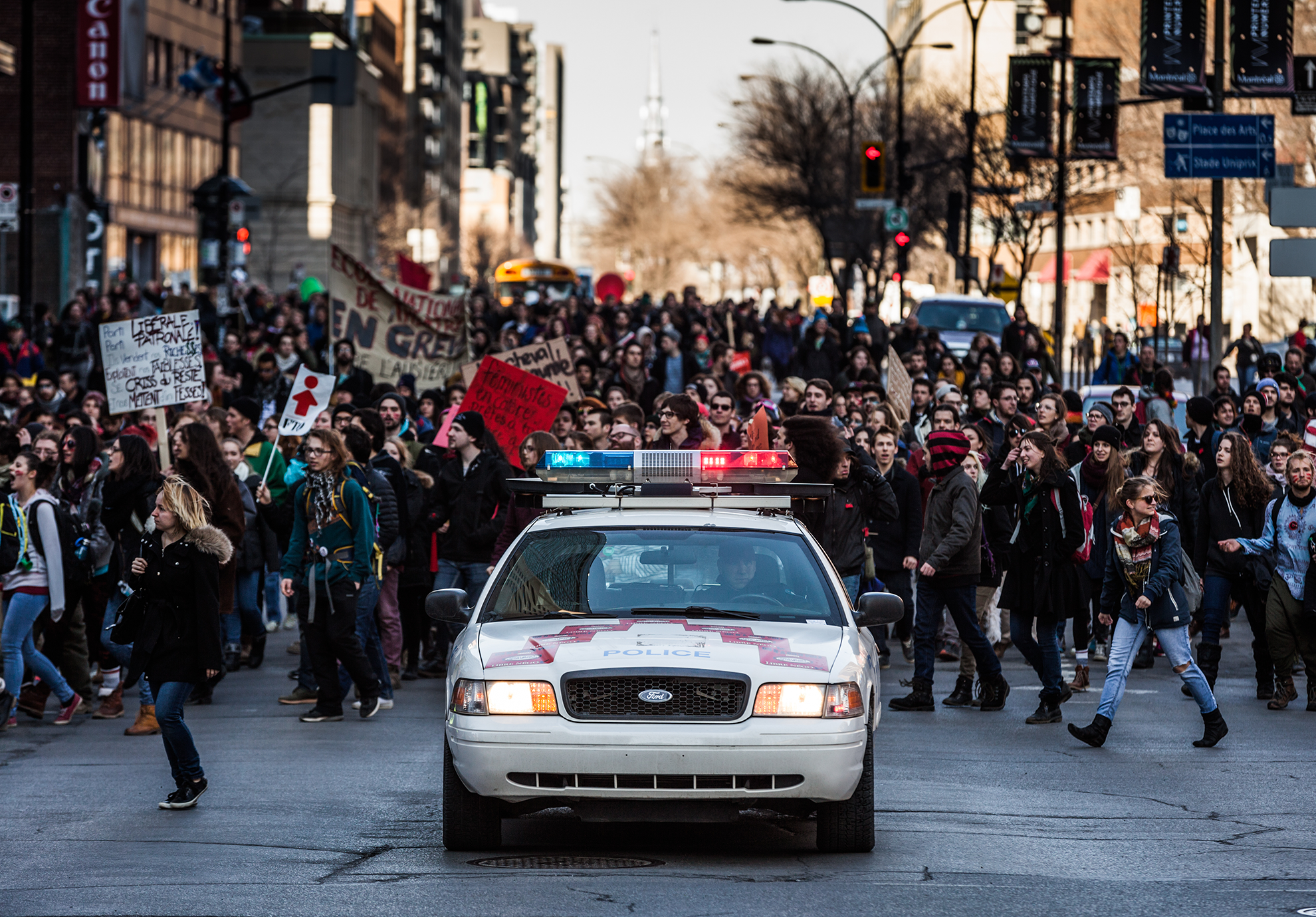
istället för en finansiell reform går Spanien från att vara en demokrati till en polisstat med övriga medlemsländers tysta samtycke.

taggtrad

Vid sidan av händelseutvecklingen i Grekland tar Spanien istället itu med kraven på att förändra det finansiella systemet genom att anta lagar som gör att landet blir en diktatur.

Dom så kallade munkavlelagarna träder i kraft trots protester från Spaniens befolkning, hela den politiska oppositionen, Amnesty International och FN.

Det är till exempel olagligt från och med nu att samlas framför en offentlig byggnad eller att fritt delta i en oanmäld sammankomst på en allmän plats. Du får heller inte använda fotografier och videoupptagningar som inte först godkänts av polisen.

Polisens egen godtyckliga tolkning av ”respekt, samarbete och lydnad” kommer från och med nu att vara tillräckligt för att bötesbelägga en medborgare utan domstolsprocess.

I brottsbalken har artikeln om de medborgeliga rättigheterna rakt upp och ner ersatts av en beskrivning av den påföljd som gäller för ”störande av ordning på offentligt plats”.

En hel nation inom EU fråntas rätten till att fritt kritisera sin regering och påverka politiska beslut.
Den övriga unionens och medias reaktion på detta?

Ingenting. Det är helt tyst.

Grekland har en jättechans imorgon.

den Grekiska staten behöver inte vara beroende av kreditmarknaderna för att kunna fungera

Grekland har imorgon en jättechans att ta kontrollen över, och kunna forma sin egen framtid förutsatt att man med en egen valuta också denominerar skulderna i den.

Monetärt suveräna regeringar har ett mycket större och flexiblare politiskt utrymme.

Regeringar av det här slaget kan inte bara kan utfärda sin egen valuta och betala statsskulder i sin egen denominerade valuta, utan de begränsningar på budgettransaktioner som man själva skapat kan också dynamiskt anpassas mot förändringar genom att man själv kan ändra på dessa regler.
Därför blir den här typen av regeringar inte heller ekonomiskt begränsade på det sätt som icke suveräna regeringar är, och dom kan då helt fokusera på viktiga frågor som full sysselsättning och prisstabilitet.

Det finns aldrig någon risk för en suverän nation som ger ut sin egen fritt flytande valuta om skulderna är denominerade i den egna valutan.
I denna mening är staten inte heller beroende av kreditmarknaderna för att kunna fungera.

Under ett sådant finansiellt system skulle makten att skapa pengar tas bort från banksektorn och överföras till ett offentligt organ, som t.ex. Bank of Greece. Bank of Greece skulle då vara ensamt ansvarigt för att skapa nya pengar och kunna överföra dom till regeringen som sedan skulle kunna använda dem för dom offentliga utgifterna.

Nationer som gett upp sin suveränitet genom att uppgå i valutaområden( t.ex. eurozonen ); eller genom att dollarisera sina valutor, är uppenbarligen inte i kontroll av, eller styr sin egen valuta och står därför inför samma begränsningar som länder led av under eran med guldstandarden.

Greeks should find the nerve to outlaw fractional reserve banking

ogrundade föreställningar och propaganda skapar myter om Grekland.

”Greece must avoid replacing one myth with another – that returning to the drachma will be a panacea. If and when the drachma returns it will not be the notes and coins issued by the State free of debt which will be the problem, it will be the new drachma denominated debt issued by the privately controlled international banking system which will hobble Greece to its present masters.”

Read article on Positive Money »
BellaCaledonia article Greek Myths »