I would like to add to what Mr Jordan Peterson talks about in this clip. And it is that the individual experience and phenomenology of the masculine spirit, when it is being cultivated inside psychological relations, or the feminine, it will immediately become challenged by the dark side of civilization, which it cannot neglect any more. This will in turn lead to a sense of a deep moral responsibility towards acknowledging were it is leading us in terms of being human. It is the loss of that which makes people go mad and the spirit of masculinity go so wrong. This reality is not beyond human understanding. It is just perceived in another way than externalized rational thinking. But he makes a very good point when he speaks about what the outcome is of the devaluation of spirit, or objective interest. When it is externalized, and not part of our objective psychic functioning in both men and women. People will become disoriented and confuse moral responsibility with literal judgements.
In that society people will become dogmatic, inhuman and materialistic. They will loose their ability to connect individual experiences to human life. No matter how brutal, or hostile to life itself those human conditions are, or what has become of that society.
Etikett: opinion
About elections and remote decision making
There is this great strategy. And it works all the time. No matter where and when.
You take part in anything that may be argumentative between people and then just choose side, make it political.
Fuel the opposing extremes and then claim as many votes as you can as you obscure the issue by heated generalisations. Promote their automatic behaviour.
People in the northern part of Sweden have a genuine dislikeness for the remote rulings of Stockholm. So any such strategy here is really clever. It will make people forget that the bottomline, what it is all about, is the decision making made on their behalf. On regional things that they have in common, agreed upon or not. And that it is not up to any outside part to jump to conclusions. But here they are, and they are getting played to secure popularity votes that is not going to benefit them in any way, and certainly not in any forseeable future. This has nothing what so ever to do with any local interests in this region. Its about getting influence in Stockholm. And claim votes wherever it is possible to secure this influence.
So let them squabble between themselves.
Fuck strategy.
Why should we bother about the army of the dead?
Comment to The Hollow men
We are skin robots with implants overlapping the memories of real human responses.
The world we live in
We all have a unique and individual expression of our being embedded in our dna. And some part of it is also inherited from a cultural conditioning behaving as a connection to a cultural past. When it unfolds in our spontaneous expression of being it will have its own pre-established way of presenting itself as imagination.
Its in our blood. And it is really not in the physical world. The struggle we have with this are within ourselves.
It also constitutes an individual form of danger when we by a collective, by corporations or governments, without a connection to our being allow ourselves to live out all kinds of interior worlds of imaginative self interest onto other people. We will then become a danger both to people, and to the world.
What we are doing to each other then, to this otherness, is trying to mirror and replace the within in other people, with that of our own, and then try to morally justify our actions by the submission of other people. As if a loud voice or forcefulness was an argument in itself.
And if they do not agree to this. We bring our war to them.
This will now become our world.
The father of our civilised world
Imaginary speaking, I find myself living in a society which is compelled to act this figure in the cloud out with the ruling it has over everybody´s apprehension. They don´t seem to know it, but they are supporting him by continuing his old formal character, making his outworn presence felt in everyday life in terms of rules and regulations, in dogmas, and in a distant dead behaviour coming out of it. They are upholding a system of absence in their lives by trying to fill themselves up with a sense of responsibility and duty towards social and religious convention. Which they also force onto others. They believe in some principles of normality. Not in the experience of transpersonal reality. And nobody seem to be questioning this cloud figure rulings there. They just see themselves as a single part of his organisational maintenance.
It is almost incomprehensible what this is doing to them, and to our environment.
His tyrannical madness is what makes them all crazy.
On christmas celebration
In contradiction to what christianity had led us to believe, and later american consumerism, i suggest that Santa Claus origin is rather to be found in the northern folklore figure of Väinämöinen, the hero creator of our world anew. And in the stories about him where he is viewed as the essence and the source. A wise man. The seer and creator. The bringer of conciousness. A bard, and the god of chants, songs and poetry.
Väinämöinen is thus very far from the figure we invigorate our children with. And he has nothing to do with our present day view of Santa Claus or the christian substitution Saint Nicholas.
Väinämöinen is connected to the foundation of the world pillar, also thought of as the ”world tree” that was thought to rest on the Pohjantähti or the North Star holding up the world. This is the very star that we put att the top of the christmas tree.
The north star and its position in the sky is also the place where heroes seek marriage with the daughters of Pohjola. Here in Pohjola the female Louhi is the powerful and evil witch queen ruling over the northern realm of Pohjola with her ability to change shape and weave mighty enchantments. She is a queen of great power that request a payment for the hands of her daughters in marriage. Louhi sets difficult to impossible tasks to perform in order to claim such a prize as her daughters, which leads to the forging of the Sampo.
The sampo is one such payment, a magic mill of plenty which churns out abundance. Its churning lid have also been interpreted as a symbol of the celestial vault of the heavens, embedded with stars, revolving around a central axis or the pillar of the world, which is our christmas tree. The giving of gifts as the sampo, can be seen as an act of sacrifice to Louhi, for one of her daughters hands. The hero and creator has to give something up to gain entrance to Pohjola and to get himself a wife. And this is done with chants, songs and poetry. And in giving we also get the magic abundance back. The celestial vault of the heavens. And we are also helping to keep the world up on its pillar. Because if there is no pillar, there is no wife. And there is no world.
There is also a good reason for doing all this at the time of ”christmas”. Christmas is celebrated on winter solstice when the pillar seems to be at its weakest, and almost broken on the longest night of the year. And as a recognition of rebirth, of creating or balancing up the world again with the help of ”Santa Claus”, or Väinämöinen, we try to assemble back his lost gift. The Sampo. Which was stolen by Louhi and broken. We bring back the pieces of sampo as christmas gifts to be able to enter Pohjola.
When we celebrate christmas, we are trying to help keeping the world up on its pillar.
The reality of being
”In the spiritual sense of reality you’re connected to everything, you know you’re connected.
But in the religious perception of reality, you committed a crime for being born, and in order to be – to justify being here – to get to stay – you had to submit yourself to an authoritarian system. You had to submit to the male dominator chain of command.”
— John Trudell
Inequality creates crime, not poverty
And if you look at it the other way around, this will show that where crime rate is high, there is a lot of inequality.
About good and evil
If we are lucky with our parents we get to grow up in the garden of eden. We will get close to earth.
But at some point we have to leave it. And we have to bring some of it with us because it is us.
Again, if we are lucky, we get initiated by our parents or some other elder when its time.
To be initiated will make us bring eden with us, that which have been given to us before we got dressed up in the generalisations of a collective personality and become that narrowness of a cultivated ideal.
Even without luck we have to find eden anew. It is not a question of good and evil.
It is both. A condition of life.
Everyday we can watch what happens when some part is preferred for the other. Our ego loose sight of right and wrong, and starts looking after itself in a forced, one sided and opinionated way. What once was eden has now turned against us.
Our moral sense is lost and we become num to the views of others and to life. We will try to force our one sidedness onto others, and pride ourself of becoming insensitive, primitive and ugly.
Without this moral conditioning from life itself, we will become a danger to life.
And believe me,
by being that person, we will also make ourselves a bloody bore.
The west we made of ourself
When i put the west i see in my mirror, i sense the image after which we have made ourselves.
This sadistic, melancholy one sided anxiety ridden paranoia of an omniscient rationality and omnipotent ruler through abstract principle of justice, morality and order. Enraged when not followed or his will is crossed. Our consciousnes is reflecting this image. Most often as cold, distant and ruthless, but as an ideal he is old, bearded and distant. A god of manhood. Even women identify with this image. This is how we all think we should appear if we want to rule, or show decisiveness. We think conquering is relating. Not surprisingly, this image we have of ourselves then, is also a wifeless one. It´s an ideal of manhood, and it has no woman beside it. There are no traits of compassion. Or true generosity. It suffers a complete lack of the feminine.
No wonder there is a problem with the nature of earth and personal feelings. And in our views on women.
This is what we force upon the world. This is our image. The very image we present ourself with to the world.
What is going on out there
Looking at the world today, the problem i see is not the youth movement started in the late fifties, continuing to this day with its rebels questioning authorities through beatniks, flower power, punks, neo rights, leftists, or modern art. Or music, film, literature, or todays climate or money distribution movements. Nor is the problem the abstract and stubborn rationality of established order through old worn out ideologies, wall street politics, or economic theory. Our religious views or our -isms.
What we see in our world are the symptoms of all of that. And the tension we have in the world is the absence of the unification of the two in the world of individuals.
The grumpy old men of frozen and established order versus the dynamic views and concerns coming from outside of time in our youth. Often this youth present their need for change in something even more rigid than the present protectors of the past. But the one are in a desperate need of the other.
Its a real horror to watch.
Authority Experiment
This testperson is our views, our beliefs, -isms and political ideologies.
What if they are our leaders and the person submitted to the electric shocks are us.
About leadership today
Being directed by, and unaware of the patterns of behaviour that flow from the organizing structure of a certain collective itself, rather than the individuality of its members,
is getting us very close to how people have come to appreciate the political, financial and corporate leadership of today.
Imagination as individuality
When we try to describe something to someone else, we use our imagination trying to coordinate the personal inner stream of images and events into a coherent and living picture. There are times when we have to use someone else’s imagination, and we will also use both our own and others mixed together to be sure to get understood by what we are trying to describe in a certain context. But we also have a tendency trying to make them more believable by telling others that they should take them literally.
And we are even saying that since other people do take them literally, we should take them for granted if we want to get listened to, or get acceptance from others without being scorned at.
We are all using our imagination as individuals to express the experiences we have of ourselves here and now in our present environment.
And it is a true nightmare that we use some of them in a literally fashion, and as a collective to reject, or even repress the individuality behind them. We are actually getting shaped into a new internal coherence by our imaginations.
Once we have written ourselves into a particular fantasy with its expectations, typicalities, its character traits, what it offers for recognizing oneself. We then begin to shape our life into a caricature of that imagination.
Revolt
All revolt is important because it leaps out of time and bring our image of history, or permanent truth, into a personal sequence of transition.
The economic drumbeat regularity
The critical—and crippling—misunderstanding about money is embodied in a narrative that is echoed daily, hourly, weekly, yearly with drumbeat regularity, in the national media and spin-chambers.
The narrative will sound very familiar—it goes like this:
The financial wealth of a nation is, at any given time, a finite resource privately and individually held by the citizens; any and all government spending must, therefore, be funded by the collection of taxes. An “out-of-control,” “big government” spends more money than the citizens are willing (or able) to pay in taxes—and this lack of “fiscal responsibility” requires the government to borrow money from the financial markets to make up the difference. This borrowing places the “out-of-control” government in direct competition for the money resources with the business-financial class of citizens. Since all citizens are ultimately dependent upon the business-financial class to create jobs and pay wages, this competition for money resources by “big government” diminishes the overall prosperity of the citizens—a diminishing that is compounded by the burden of tax payments, and further compounded by the government’s debt which represents future tax burdens.
But any economist who makes this claim, either explicit or implicit, that a nation which issues and manages a sovereign fiat currency must either borrow or collect taxes in order to have currency to spend, should have his or her diploma revoked.
And any political leader in a sovereign nation which issues and manages its own fiat currency who claims the national government doesn’t have the “money” to pay for goods or services which are, in fact, available within the national borders—and which would greatly benefit the citizens—should be tarred and feathered and drummed out of office as an ignorant charlatan.
Also, any banker or financial leader who suggests that a sovereign nation which issues and manages its own fiat currency is dependent upon the bond market to “finance” its sovereign spending should be investigated and prosecuted for the financial frauds they are more than likely in the act of perpetrating.
And any journalist who makes his or her living counseling the public about economic matters, who fails to take the time to understand and explain to his or her audience how sovereign fiat currencies actually function, should be summarily stripped of their journalistic credentials and pushed out the door of the newsroom.
In other words, sovereign spending of money happens first and taxes are collected afterwards and the reason the taxes are collected at all is not so the government can spend further, but to ensure that the citizens will continue to want to sell goods and services in exchange for the money the government issues.
Second, sovereign spending which pays the citizens to create real goods and services is not the same as “printing” money in the sense of the alarm-bell description proclaimed by the drumbeat. As long as unused labor and unused resources are actually available, issuing money to marshal that labor and those resources to achieve collective goods will not create inflation but, instead, will expand the overall economy.
Read all of it @: New Economic Perspectives
About internet access
What Högsta Marknadsdomtolens(Highest Market Court) ruling achieved in Sweden is that companies and organizations now can shut down individual domains that do not suit their interests through the threat of legal proceedings.
Should businesses and organizations get control of which pages we can access on the internet by shutting down domains in conflict with their view on the material on a site?
By dissallowing a certain media headline you don´t actually force the opinions or material behind it to go away.
To become public property
It can differ quite a lot between one person and another intellectually, in terms of knowledge and skills, and to be able to draw conclusions from rational arguments rather than rhetorical.
But in terms of our character, the differences are much smaller.
It is with our character we share our public opinion with others. It is were it gets its outlet.
All our differences are smoothed out.
We act anonymously on public opinion with rhetorical conclusions in the protection of the majority to justify our views and our actions.
We will then become public property.
Its not about the media, its about you and me.
The feeling tone news media deliver to us is designed to function as a short circuit, to prevent us from making thought through rational considerations when it comes to our own situation. That’s why they always seems to aim to destroy our rational defences, so that we come to conclusions immediately, without reflection and in emotional distress by rhetorics instead of solid well made arguments.
Media always try to stimulate our feelings on an unconscious level,
to make people respond with automatic behaviours, and collectively instead of individually.
That is why they are so effective when we are made uncertain, in crisis, follow opinion polls, an ideology, an -ism, trends or is in shock.
We agree on things, think or act in a way we would not accept if we were given time to consider it properly.
The fact that we have a tendency to stand by the opinion in order to belong and to get recognition from our surroundings, to be consistent although the reasons for our opinions may be questionable.
That fear is something that is expected.
Unconsciously we then inflict terrible hardship on each other rather than change the beliefs we have that are created for us, to those that is created by us.
Whats all this talk about a budget?
A balanced budget means no new injection of money into the economy.
The financial year looks the same at the end as it looked at the beginning.
No change has occurred.
There is only one reason to have such a limitation of wealth, that is if inflation threatens the economy as our gouvernment has charged too little tax out of it.
A budget surplus means that the government has managed to spend less money in to the private sector than they have taken out in tax.
This means that the private sector now has a deficit of money in it.
The financial year ends with the fact that there is less money in the private sector than there was in the start of the year.
This means that households and firms has to borrow or use their savings to maintain their consumption of goods and services in order to maintain the existing level of revenues and living standards.
This is also occurs when our banks are aloud to control the money supply.
If the surpluses are retained for a long time the whole of the private sector has to reduce their expectations and their economic activity, and we get a recession with unemployment as a consequence, or it has to try to compensate by putting itself into (more) debt. Which was the case leading up to the bank crisis in 2008.
A follow up to this happens when loans cannot be repaid, which later turned out to accelerate and spread the banking crisis.
With a budget deficit the state has charged less tax out of the economy than it has spent into what we use in the economy. There is a general financial prosperity and employment increase because the supply of money increases to come in line with the existing resources.
The macroeconomic terminology thus have an opposite impact on the real economy than household thinking because households and firms use the money. Gouvernments have the constitutional right to create and spend them for us to be able use them in the economy.
A budget then has nothing to do with ideology, an -ism or any doctrin. But it has all to do with who controls the money supply.
Nonlinear outcome of elections huh?
Money drives almost all activity on the planet, yet simple questions get overlooked – questions like: where does money come from? Who creates them? Who decides how, and where they are first going to get used?
If you control the money supply you also control how the money first is going to be used.
Right now, almost all money in the current system is debt, and the only way that we can bring new money into the economy is to borrow it from our banks.
When we rely on banks to create most of our money, then the only way of getting more money into the economy – is for the private sector to go further into debt.
When we choose to live in an economy that privileges lenders over debtors and capital over labor, we also choose to live with the fact that our companies also focus more on profits made by capital assets managed by the banks over labor. We will get an economy were our companies focus more on expanding their activity on the financial markets, on their financial products and by then making cutbacks on workers in shrinking markets caused by this expansion, rather than hiring and developing new products and services.
We seem to have forgot the simple fact that a sovereign government like the one here in Sweden, is the monopoly issuer of the currency, and it is by mishandling this, our sovereign rights to our currency that creates the difficult conditions for the domestic companies, our common domestic economy, and for the people in the thinly populated areas of our country.
We are forgetting that our multi-national corporations has as their business model the transformation of small self-sufficient local economies into the unwitting and dependent consumers of global supply chains from which these corporations make their profits.
What this is doing is to create great difficulties for the local domestic markets, our domestic companies and our small cities in rural areas because money is ”no longer being made there”.
All these small markets are being replaced by global supply chains. Promoting export is being thought of as the “broker” of all the money that’s available to us. Not our local companies and small markets in our thinly populates areas of our country where so many of us live.
There seems to be an economic taboo against creating money and actually spending it into the real economy. It’s OK to do things like pumping all new money into the financial markets, pushing up house prices in our main cities and ”make” all new money there first. But it is a complete taboo to actually spend that money on something that benefits all of us, and our society as a whole. And by then the economy as a whole.
Small producers, small business owners and small farmers in small communities do not benefit at all in the current economy. They have no local market where money is being ”made”.
And currently, most money seems to be used to harvest the public opinion instead of being used for any long term common good outside the most populated areas.
If one ever stops to wonder about the ”strange” nonlinear outcome of elections, or a sudden rise of certain popular ideas, here is a good place to start looking.
Resistance is an authentic response
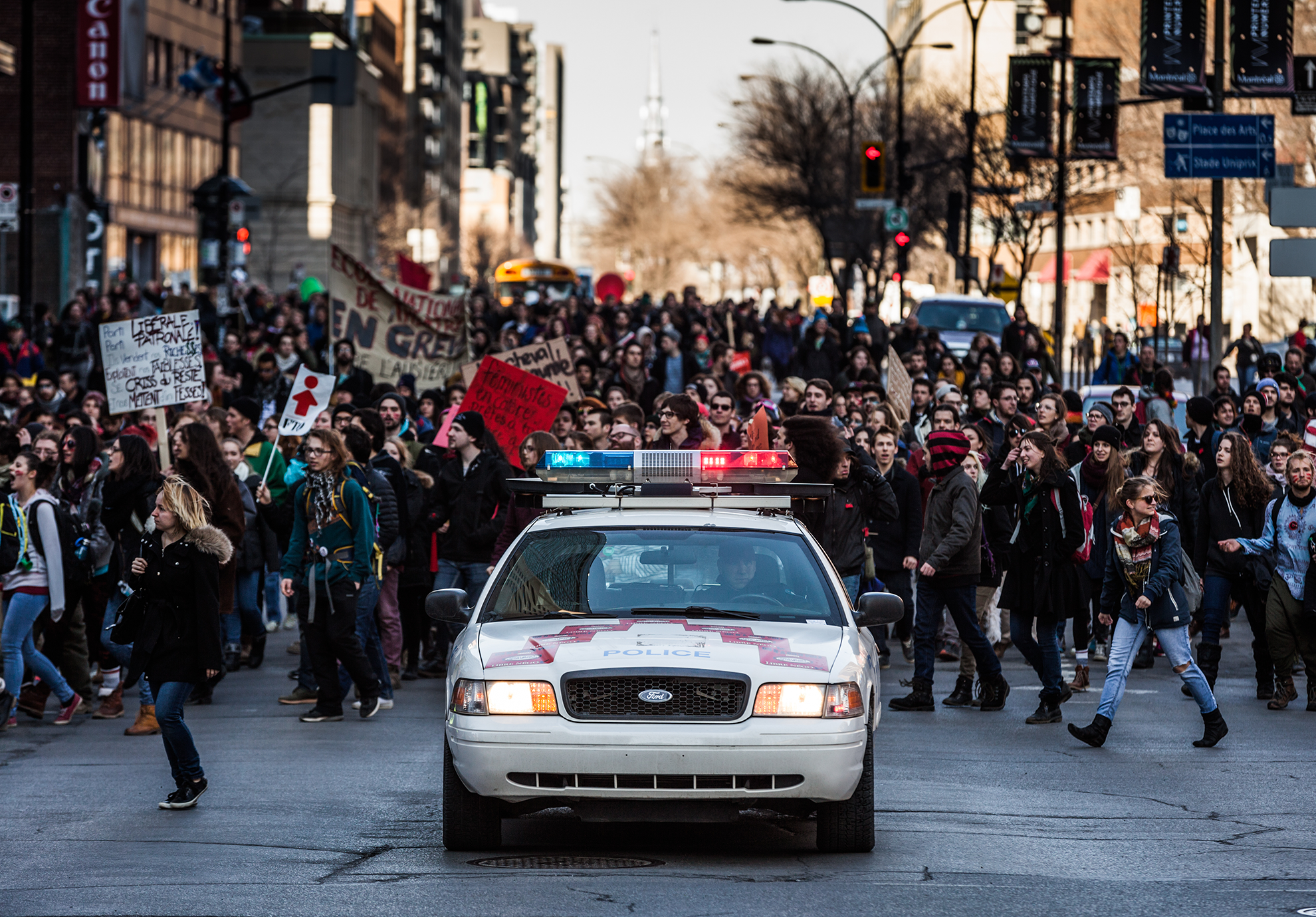
The world is drawing attention to itself by means of its symptoms, its becoming aware of itself as a psychic reality.
The world in which all subjectivities are set has fallen apart. Breakdown is in a new place – bank scandals with government collusion, pollution and street crime, the loss of literacy and the growth of junk, deceit, and show. We now encounter pathology in the psyche of politics and medicine, in language and design, in the food we eat. Sickness is now “out there”.
Hence, to call a business “paranoid” means to examine the way it presents itself in defensive positions, in systematization and arcane codes, its delusional relations between its product and the speaking about its product, often necessitating gross distortions of the meanings of such words as good, honest, true, healthy, etc. To call a building “catatonic” or “anorexic” means to examine the way it presents itself, its behavioral display in its skinny, tall, rigid, bare-boned structure, trimmed of fat, its glassy front and desexualized coldness and suppressed explosive rage, its hollow atrium interior sectioned by vertical shafts. To call consumption “manic” refers to instantaneity of satisfaction, rapid disposal, intolerance for interruption (flow-through consumption), the euphoria of buying without paying (credit cards), and the flight of ideas made visible and concrete in magazine and television advertising. To call agriculture “addictive” refers to its obsession with ever higher yields, necessitating ever more chemical energizers (fertilizers) and mass killers (pesticides, herbicides) at the expense of other life forms and to the exhaustion of agriculture’s earthen body.
– James Hillman –
movements is a public opinion

We have the perception that it is the corporate economy itself that is the “broker” of the money that’s available to be used in the world. And it is projected and reinforced by the global stock and financial markets which in themselves seems to believe that they are the exclusive decision-makers about who gets to spend money, and for what purpose, even up to the point of establishing and reinforcing the belief that sovereign governments themselves must borrow their money from the corporate economy’s ”financial industry”.
We seem to have forgot the simple fact that a sovereign government like the one here in Sweden, is the monopoly issuer of the currency, and it is by mishandling this, our sovereign rights to our currency that creates the difficult conditions for our domestic companies, our common domestic economy, and for the people in the thinly populated areas of our country.
Protests have a cause

We are giving away our money sovereignty, our resources and our ability to decide and control our own policy.
We really dont have to create great difficulties for the local domestic markets, our domestic companies and our small cities in rural areas. We dont have to replace them by global supply chains.
The view of promoting export as the ”brokers” of the money that’s available to us is just dead wrong.
And austerity is not how to bring new money into the economy, its about scarsity and more of a long-term political agenda that privileges lenders over debtors and capital over labor.
The importance of this is that all new money can really first be spent into our economy for the interests of society as a whole when they are created, and first be used for our common purposes.
We dont have to accept opinions about our monetary system that isn’t shaped by the interest of our common good.
About fate
”The irony of fate is that, what I don’t recognize as coming from Me, will be served to Me, as fate”.
Hur relaterar vi till varandra och till våra ideér?
Vi är nästan i stånd till vad som helst för att få ett erkännande och bli bekräftade av andra i våra yttre roller. Vi låter också detta helt styra vårt beteende där.
Vi anpassar till och med vår moral efter detta.
Men vi har också en inre personlighet som skapar relationer till vårt inre och som styr vårt beteende i förhållande till oss själva.
Det är nog bara där, i detta något mitt emellan dom, som det är möjligt för oss att kunna hitta något som liknar äkta relationer.
Vad letar vi efter?
Vi är så vana att anpassa oss till det i andra som dom vill tycka om hos sig själva när vi söker efter bekräftelse, vårt livs berättigande, ja själva vår existens mening, att när vi söker efter detta något i vårt inre så börjar det hos andra.
Vi letar efter vad av oss som vi kan hitta i andra, och hur det skiljer sig åt från vad vi vill vara.
Men det är ju inte vad vad som skiljer människor åt som gör oss till vad vi är.
Vad som är unikt i oss själva har förmodligen funnits med i oss ifrån allra första början.
Om Erfarenhet
Erfarenheten och våra uppfattningar påverkar varandra ömsesidigt.
Vi härleder inte bara våra föreställningar ur våra erfarenheter i enlighet med fantasin om empirism,
våra föreställningar formar ju också själva erfarenhetens natur.
– James Hillman
Så hur mycket av våra uppfattningar tillåter vi att bildas ur oss själva?
Medieanalys
Jag får alltid intrycket av att media idag hamnat i en allt tydligare samexistens med partipolitiken och ekonomin hos våra största exportföretag.
Detta intryck förstärks ytterligare när nyhetskällan allt oftare består av enkla opinionsundersökningar där man driver populära åsikter i än den ena, än den andra politiska riktningen då opinionen också styr mediernas ekonomi.
Den statliga ekonomin kommer på det här sättet att beskrivas uteslutande ur våra globala exportföretags perspektiv utan förankring i makroekonomin som i sin tur styrs på ett fundamentalt sätt av hur vårt monetära system är beskaffat. Dessa företag har till skillnad mot staten inte någon rätt att ge ut några nya pengar och inte heller någon konstitutionell rättighet att styra över penningmängden.
Det går därför inte alls att ur nyhetskällornas uppblåsta kallprat och opinionsundersökningar dra några allmängiltiga slutsatser om de processer som styr den gemensamma ekonomin för de människor i vilkas intresse vår media tror sig föra sin talan.
Flertalet kommer på det här sättet att förlita sig på att en viss åsikt är den rätta åsikten. Och dom kommer att äga åsikter som då av nödvändighet följer ur ett visst allmänt accepterat åsiktssammanhang, utan att veta varifrån den ursprungligen kommer, eller på vilka antaganden den egentligen grundar sig.
Inte heller hur de i verkligheten relaterar till nationalekonomin.
Nyhetsförmedlingen befinner sig i en upprepning som inte längre ger en saklig återgivning till folk i allmänhet. Den kommer istället att spegla det politiska spelet, och våra globala exportföretags ekonomiska intressen i en symbios med gemensamma föreställningar om den verklighet man tror sig kunna beskriva inifrån denna.
Undantagen är få, och den uppenbara följden av det här är att man på detta sätt bara försöker stimulera våra känslor på en omedveten nivå så att vi ska reagera på ett av andra överlagt och förutbestämt sätt.
Våra medier och våra beslutsfattare hamnar på det här sättet bara i en sluten inbördes nytta av upprepat gemensamt innehåll.
Om informationskonsumtion
nyheter är en produkt av information som skapats i ett bestämt syfte och säljs i en förpackning med en tilltalande rubrik. Hur förpackningen uppfattas säljer också bättre än själva innehållet.
Känslorna nyheter förmedlar fungerar i bästa fall som kortslutningar som förhindrar att vi gör genomtänkta och rationella överväganden när det gäller vår egen situation. Det är därför dom alltid syftar till att rasera våra rationella försvar så att vi fattar direkta beslut utan eftertanke och gärna under känslomässig osäkerhet.
Innehållet som nyhetsprodukten förser oss med försöker därför alltid stimulera våra känslor på en omedveten nivå så att vi ska reagera med automatiska beteendemönster, och kollektivt istället för individuellt.
Det är därför dom är så effektiva när människor är i kris, är osäkra, följer opinionsundersökningar, trender eller befinner sig i chock.
Vi går med på saker, tycker eller agerar på ett sätt vi inte skulle acceptera under andra förhållanden.
Att vi sedan har en benägenhet att vilja stå fast vid åsikter för att vinna erkännande från vår omgivning, och vara konsekventa trots att skälen till våra åsikter är tvivelaktiga, det är något man räknar med.
Omedvetet utsätter vi sedan både oss själva och andra för stora påfrestningar både personligt, ekonomiskt och politiskt hellre än att vi förändrar de övertygelser som är skapade åt oss mot dom som skapas av oss.
Whose economy are we talking about
We have given the banks the rights to shape our minds on the economy.
Despite the fact that we know that the people who run the banks are primarily concerned with increasing the profitability of the banks.
By unwittingly not knowing what we are doing, we then take key decisions on their behalf. We base our opinions, and how to wiew the economy on how the banks make up their wiews. We simply accept their truth. And we accept self injuries, privatising common assets and austerity plans by their advisory.
This is dangerous.
We are giving away our resources and our ability to decide and control our own policy. By doing this we are just supporting the conditions to further push up debt, house prices, inflate speculative financial bubbles, and starve small businesses of investment.
When our government talks about the economy, about their financial policies and funding, it is all to obvious that the decisions they are making about our economy are shaped by the interests of our banks.
They are not shaped by the interest of our common good.
Sovereign Money Initiative
The Swiss population will be the first in the world to vote on their banking and monetary system, thanks to the tireless efforts of a pro-Sovereign Money campaign.
“In a nutshell, the proposal extends the Swiss Federation’s existing exclusive right to create coins and notes, to also include deposits.
With the full power of new money creation exclusively in the hands of the Swiss National Bank, the commercial banks would no longer have the power to create money through lending. The Swiss National Bank’s primary role becomes the management of the money supply relative to the productive economy, while the decision concerning how new money is introduced debt free into the economy would reside with the government”.
Heres a link to their website »
And here is Reuters report on it »
How to commit to real change
real change can only be achieved by a fundamental reform of our monetary system.
Members of the Icelandic Parliament have submitted a motion to review Iceland’s monetary system and look at alternative monetary systems.
The resolution comes six months after the release of a report commissioned by the Prime Minister of Iceland entitled Monetary Reform – A better monetary system for Iceland that outlined the need for a fundamental reform of Iceland’s monetary system.
This report emphasises the limits of the current monetary system and sets out the merits of a Sovereign Money system, as advocated by Positive Money.
Read more here »
A simple Question
If the only way to get endorsement and recognition from others is to adapt in ourselves to what others want us to appreciate in them. How are we going to appreciate and learn who we are with an ability like that?
What kind of personality do we create with a training such as this?
Neo-liberal myths constrain our understanding of poverty
Budget-makers need not cower before the bond-market vigilantes. In fact, they need not bother with bond markets at all.
1. A sovereign government is never revenue constrained because it is the monopoly issuer of the currency.
2. Tax revenue is not used to fund government spending. Governments tax for a number of reasons, which include creating a demand for its currency buy forcing the non-government sector to offer goods and services for sale in order to get access to that currency so that it can relinquish its tax obligations.
3. A sovereign government can always meet any of its liabilities which are denominated in its own currency.
4. A sovereign government does not have to issue debt in order to spend. In fact, governments just borrow back prior deficit spending. A government can always deficit spend without matching that net spending with debt-issi
5. A sovereign government is clearly able to spend freely to restore employment. It can always purchase any idle resources that are for sale in the currency that the government issues.
6. The government via its central bank sets the interest rate and can control interest rates along any segment of the maturity curve should it desire to do so. Bond markets do not have power over a sovereign government.
7. A corollary is that foreigners can never fund government spending. China investors do not issue the Swedish krona!
Read full article at Bill Mitchells Blog »
Bostadspriserna drivs upp av alla nya pengar som bankerna skapar
det är den verkliga ekonomin som behöver mer pengar inte den finansiella.
Så länge våra bostadsmarknader drivs av en kreditgivning där våra banker får skapa nya pengar som leder till att allt högre priser skapas på bostäder, så kommer människor att behöva en allt högre och högre skuldsättning för sitt boende. Och eftersom bolån utgör nästan 80 procent av hushållens skuld är en sådan kredittillväxt ohållbar.
Det är viktigt att komma ihåg att pengarna vi lånar inte kommer från andras insättningar. Det är nya pengar som bankerna tillåts skapa när dom ger ut lån.
Pengar i det nuvarande systemet är skuld, så det enda sättet som vi kan tillföra pengar till ekonomin och förse hushållen och företagen med nya pengar är om vi lånar dem från våra banker.
Våra banker skapar nya pengar på ett konto genom att helt enkelt använda en dator och ändra siffrorna på det kontot som ska ändras. Det är förvillande likt, men inte samma sak som att trycka nya pengar eftersom dom här pengarna skapas digitalt.
Till Artikel i SVD här »
Svenska systersiten till Positive Money, Positiva pengar » har skrivit mer om detta.
Verkligheten och våra medier
Dagens politiska och ekonomiska mainstream-journalister ägnar merparten av sin tid åt ”det politiska spelet”.
”Det hjälper inte att ha rörliga bildnyheter, bloggar och podcasts om intrycket är att de tillhör samma gamla etablissemang: politiker och medier i symbios. Som sådana där Mats Knutson-kommentarer i public service. Nöjd och uppblåst i stilig slips talar han om det politiska spelet medan verkligheten för länge sedan sprungit förbi honom; den är inte längre något spel, den är en tragedi.”
Särskilt påtagligt är detta när det gäller Nationalekonomi. Med väldigt få undantag har våra medier inte en aning om grundläggande fakta. Man berör dom inte ens. Det politiska spelet är viktigare än hur en makroekonomi verkligen fungerar.
Till Artikel i ETC »
Intressant grepp av Grenoble att ta bort all reklam i det offentliga rummet och ersätta hålen efter reklampelarna med träd. Och att majoriteten av invånarna är nöjda med att staden blivit vackrare än den varit tidigare.
Dom har fått tillbaka sin stad!
”First it was São Paulo, then Chennai. Then Grenoble, Tehran, Paris and now even New York have spawned movements to replace or ban outdoor advertising.”
Mer om detta hos The Guardian »
Höstbudgeten och skatter i ett historiskt perspektiv
sagt av Thomas Pikkety om beskattning.
”Mellan 1930 och 1980 var genomsnittsbeskattningen för dom högst betalda i USA 82%. Vilket till och med var högre än i Sverige, Frankrike och Tyskland.
– Vilka lärdomar kan vi dra av detta då?
För det första förstörde det inte den amerikanska kapitalismen eller demokratin. Den fanns kvar i slutet av perioden.
Den andra slutsatsen handlar om tillväxttakt, produktivitet och innovation.
Det är intressant därför att den amerikanska tillväxten under 1950, -60 och -70 talen faktiskt var högre än de varit sedan 1980 talet.”
Nu är det Finlands tur
Finlands sak är vår.
Nu är det Finlands tur att fundera på om vi ska fortsätta att tillåta att våra finansmarknader ska få diktera vår ekonomiska politik via våra affärsbanker, eller om vi faktiskt vill kunna styra över den själva för att kunna tillgodose våra allmänna och gemensamma politiska mål.
Det är alltså Finlands tur att tvingas till samma självdestruktiva åtstramningar som Grekland tvingades till.
Det är ingen skillnad mellan ett medlemskap i eurozonen, eller som vi gjort i Sverige, att överlåta vår konstitutionella rätt att skapa pengar och därigenom också kontrollen över penningmängden till våra privata banker. Vi har ju under dessa förhållanden ändå övergett riksdagens och regeringens rätt att i verkligheten kunna styra över finanspolitiken och därigenom också att bestämma hur pengar först ska användas, till någon annan.
”It will be as if each EMU member country were to attempt to operate fiscal policy in a foreign currency; deficit spending will require borrowing in that foreign currency according to the dictates of private markets.”
– L. Randall Wray in his 1998 book, Understanding Modern Money
Det är viktigt att notera att tanken bakom dessa åtstramningar är föreställningen att det kommer en dag då våra regeringar kommer att ”få slut på pengar”. Att en nation kommer att gå omkull om den inte skär ner på dom offentliga utgifterna och säljer ut sina tillgångar.
Men under nuvarande förhållanden kommer det här bara leda till att en Nation ökar sitt beroende, att ett land tvingas att skapa ytterligare förutsättningar att skuldsätta sig än mer.
En nation kan visst gå omkull, helt sant, men inte alla nationer.
En nation kan faktiskt bara bli oförmögen att betala sina utgifter om valutan som används ges ut av någon annan, svarar mot en myntfot(t.ex. guldet.), eller om landets skulder är i någon annans valuta än den egna.
Finland delar den här minsta gemensamma finanspolitiska nämnaren med många andra länder. Inte bara i västeuropa. Utan även med alla de länder som vi vanligtvis kallar ”utvecklingsländer”.
Vi kan ha hur många åsikter som helst om detta, men vad vi egentligen borde diskutera är grundläggande fakta.
En förändring kan faktiskt bara ske om vi först gör en grundläggande förändring av vårt monetära system.
The Worst Tours
A nation and its cities destroyed by austerity. There is no exaggeration here.
I invite people to see for themselves. An extraordinary outcome of an out of control recession cult ideology reinforced by neo-liberal Groupthink ruining the prosperity of a people.
I had quite a day yesterday as I went on a field trip around Porto organised by the – The Worst Tours ».
Read the whole article here »
Society Trap
Inequality For All – Documentary
What really is happening in our societies. An economic model gone wrong.
Den här finns på svenska hos Netflix också.
https://www.youtube.com/watch?v=0NdDupITDv8
Funktionella finanser?
vad kan vi mena med verklig förändring.
Så länge vår regering och riksdag inte kontrollerar penningmängden så kan den heller inte påverka vårt välstånd eller vår sysselsättning i någon större utsträckning.
Ingen regering har någon finansiell kraft i sina beslut utan dess konstitutionella rätt att ge ut och styra hur våra pengar först ska användas.
Vi får som nu vänja oss vid att våra banker finansierar sin egen likviditet med större delen av penningmängden för att kunna fortsätta spekulera i en finansiell sektor som ökar 3 gånger snabbare än ekonomin i övrigt.
Vi kommer fortsatt att ha en liten gemensam penningmängd, låga löner, låg konsumtion och långa köer på arbetsförmedlingarna. Vi kommer att fortsätta skylla det på varandra, på våra partiåsikter, slåss om det, och munhuggas och ingenting kommer i förlängningen av detta att förändras.
Eller kanske ska vi överlåta någonting mer så att allt ska bli bra igen? EU,
Gå med i eurozonen? NATO? Acceptera TTIP, ISDS?
Vad mer?
Lösningen finns inte någon annanstans.
Vi har den helt i egna händer.
Vem ska få fatta besluten i vårat ställe?
om en regering inte längre har kontroll över penningmängden, för vem fattas då besluten hur pengarna först ska användas?
En nyckelroll för en centralbank är att tillhandahålla likviditet till sina banker.
ECB har som svar på att grekerna genomfört en demokratiskt folkomröstning om huruvida IMF, EU och ECB ska få bestämma hur en nation vill utforma sin politik och sitt självbestämmande dragit tillbaka stödet av likviditet till dom grekiska bankerna.
ECB har alltså medvetet vägrat att uppfylla sin skyldighet att tillföra likviditet.
Centralbankerna i Sverige och andra länder har tillfört enorma belopp till bankerna för att förhindra att krisen för dem skulle fördjupas, medan ECB av andra skäl istället bara ytterligare förvärrat en situation som egentligen skulle ha bidragit till att hjälpa Grekland.
IMF, EU och ECB används alltså på det här sättet indirekt för att kunna påverka enskilda länders politik i den riktning som bäst stämmer överens med bankernas intressen.
Ett lands politik och självbestämmande bestäms alltså ytterst av vilka som äger kontrollen över penningmängden.
Vad menar Carl Bildt?
Carl Bildt skriver på twitter: -Well, a clear majority in Greece doesn’t want the help that other Euro countries have offered. Their choice. But tragic.
Det finns inget tragiskt med att lyssna på vad folket man representerar önskar innan det fattas viktiga beslut i deras ställe. Det kallas demokrati.
Övriga Europa borde prova det innan de inför åtstramningar, nedskärningar och begränsningar för alla dom människor som besluten kommer att beröra direkt i deras vardag. I den meningen är medborgarnas vilja absolut.
Det handlar inte om att Grekland inte vill ha hjälp, utan hur den hjälpen skall ges.
Theodor Kallifatides uttryckte det på ett folkligt sätt såhär:
”Det här är en omröstning om det grekiska folket ska svälta med värdighet eller utan värdighet”.
Vi vet ju alltför väl vad som hände i Tyskland när den möjligheten inte gavs till dem. Men sedan fick stora skuldavskrivningar när man efteråt förstod hur viktigt detta var.
Island är ett annat föredöme för hur Europeiska demokratier bör agera i viktiga frågor.
Kanske borde Carl Bildt lyssna på vad President Ólafur Ragnar Grímsson har att säga:
Tillväxt betyder inte åtstramningar
vems välstånd gynnas egentligen av alla åtstramningar?
Thomas Piketty har påvisat det. Både OECD och IMF har dragit samma slutsats.
Den del av penningmängden som våra affärsbanker har tillåtits kontrollera genom lån ökar 3 ggr snabbare än aktiviteten i den verkliga ekonomin, och det är det som bromsar tillväxten.
Det betyder i sin tur att vi med statens del av penningmängden, det som vi kallar vårt underskott, betalar för bankernas utlåning istället för att spendera dom på våra gemensamma resurser.
Vi subventionerar alltså våra affärsbankers spekulation och kapitalförvaltning med statliga medel.
Det är ganska enkelt att se dynamiken i detta.
96% av alla pengar skapas genom skuld av våra banker. Om vi skulle betala av alla skulder så försvinner också den delen penningmängden. Med ett undantag, skulden för pengarna kommer att finnas kvar att betala på grund av räntan när alla lån är betalda och pengarna försvunnit ur ekonomin.
När staten spenderar in pengar direkt i ekonomin genom sitt underskott bidrar det till, och ökar hushållens och företagens tillgångar i den privata sektorn. Vi får mer pengar att handla för och storleken på ekonomin växer för att komma i nivå med befintliga resurser.
Dessa pengar, 4% av penningmängden, är icke räntebärande skuld. Vi betalar tillbaka dem genom statlig inkomstskatt.
Alltså, vi använder oss av det statliga underskottet, av pengar som staten ger ut, för att kunna betala på den räntebärande och lånade delen av den samlade penningmängden eftersom mycket lite av dom pengarna till slut hamnar i den gemensamma ekonomin då de först filtreras genom våra bostads och finansmarknader.
Varifrån skulle pengarna till detta annars komma ifrån?
Ändå hävdar många av våra folkvalda politiker envist att det handlar om att välfärden blivit för kostsam, vår offentliga service för stor och att vi måste göra eftergifter i vårt välstånd för att det ska bli bra igen.
Samtidigt överstiger avkastningen på kapital ekonomins tillväxttakt över tid och detta leder till en ökad ojämlikhet med så stora skillnader att det påverkar tillväxten negativt.
Faktum är att dom statliga finanserna inte säger någonting om hur stor vi vill att den offentliga sektorn ska vara.
Den frågan är i själva verket helt oberoende av dess finanser.
Så vad pratar man om i Almedalen egentligen?
Cut out all the ravings of vested interests
The fact is that when the crisis hit these governments had no trouble getting cash.
It is always good to work with first principles as they will rarely lead you astray. They cut out all the humbug in the media, the statements by politicians and the ideological ravings of vested interests.
Sweden – sovereign issuer, freely convertible currency, some foreign currency debt.
”So those sovereign-issuing nations(among them Sweden) with no or negligible debt denominated in foreign currency have no default risk on their public debt associated with factors such as size of deficit, outstanding debt stocks etc. Their government’s can always meet their liabilities and would only default as an insane act of politics.
There are no financial risks associated with their debt.
I haven’t done a complete analysis of the proportions of debt that are denominated in foreign currency for the other currency-issuing nations. My feeling is (from old data) that the proportion varies but is small.
At any rate, these nations can always meet their domestic obligations (including servicing debt denominated in their own currency which is held by foreigners) but in some weird situation might find it hard to service their foreign-denominated debt. Highly unlikely but there is a smidgen of risk.”
For the non-sovereign in currency nations – all of which are ‘happily’ ensconced in the failed Eurozone, they all face public debt default risk. The risk varies but they all are exposed to it.
– Bill Mitchell
EU Decides Not to Target Investments to Help Nations It Forced into Great Depressions
”On its face, the Juncker plan, therefore, is a disgrace. It expands the troika’s shameful corporate welfare policy while refusing to aid the 100 million EU citizens in Spain, Greece, and Italy (roughly one-third of the EU’s total population) who live in nations unnecessarily forced into Great Depression levels of unemployment by the troika’s insistence of inflicting austerity on economies already suffering from inadequate demand. It is also designed to be a stealth privatization program. Private companies will end up with majority ownership of vital infrastructure such as roads, tunnels, and bridges.”
Om att skörda opinionen

Opinionen är det sociala verktyget för att kunna skörda allmänhetens undermedvetna beteende och energi. Det åstadkoms genom att människor ställs inför en verklig situation som framkallar stark affekt.
Avsikten med detta är att vi i vårt laddade känslotillstånd ska överge vårt förnuft och dess rationella överväganden och fatta direkta beslut utan eftertanke.
Oavsett medium.
Som okritiska informationskonsumenter faller vi nu offer för skapandet av tillrättalagda åsikter och sanningar som skapats åt oss. Åsikter och omdömen som inte är ämnade för individuell prövning.
Det är på det här sättet som den allmänna opinionens övertygelser skapas i ett bestämt syfte.
Utan att den enskilde individen närmare reflekterar över detta, så styrs sedan våra tankevanor av att vi äger åsikter som förefaller oberoende av individen.
Våra åsikter kommer att styras av ett omdöme som verkar ha tillkommit av sig självt, och som fungerar i sig självt. Det verkar nästan som om vårt omdöme saknar anknytning till det personliga livet.
Vi formuleras av någon annan i en bestämd riktning och till en enhetlig opinion utan att vi vet om det.